A missing tooth is not only a gap in your smile. The bone underneath slowly shrinks, and the teeth on either side can tilt into the space. Two common ways to replace it are a dental implant and a fixed bridge. The better choice depends on bone, neighbouring teeth, budget, and how long you want the result to last.
How an implant works
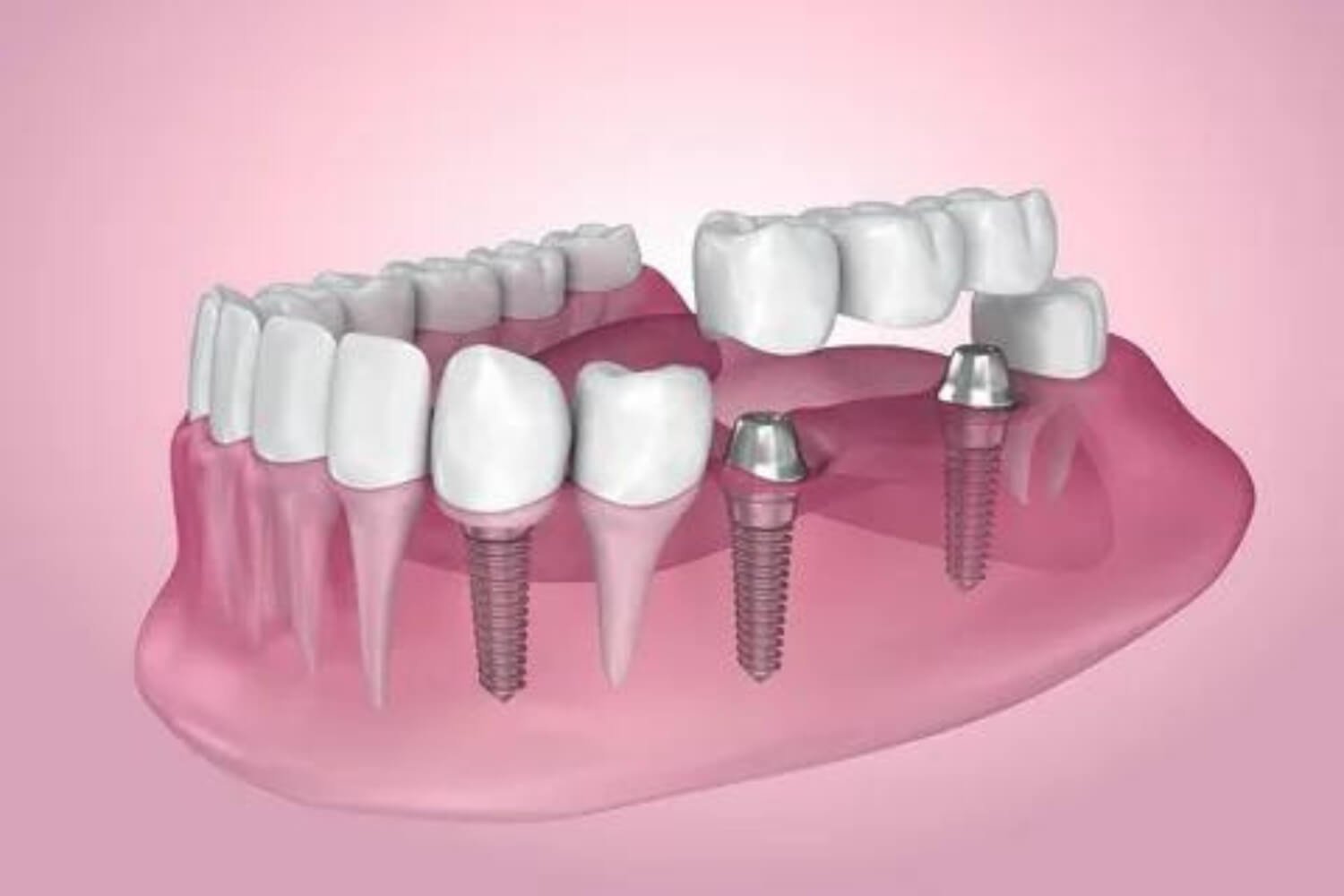
An implant is a small titanium post placed in the jaw. After it bonds with the bone, a crown is attached on top. The neighbouring teeth stay untouched. Because the post stimulates the bone, it helps preserve the shape of the jaw. Guided planning with scans makes placement more precise, which is how implant cases are planned at our Ranchi clinic.
How a bridge works
A bridge uses the teeth beside the gap as supports. Those teeth are prepared, and a connected set of crowns fills the space. Treatment is often faster than an implant and does not require surgery. The trade-off is that healthy neighbouring teeth are reduced to hold the bridge, and the bone under the missing tooth is not replaced.
A simple way to decide
- Choose an implant when the neighbouring teeth are healthy and there is enough bone, or when bone can be rebuilt.
- A bridge can suit patients who want a shorter treatment and already need crowns on the supporting teeth.
- Several missing teeth may be better served by multiple implants or an implant-supported denture.
- Smoking, uncontrolled diabetes, and active gum disease need to be addressed before either option.
There is no single best replacement for every mouth. A consultation with X-rays lets the dentist show you both plans, including healing time and how each option will feel when you chew.